
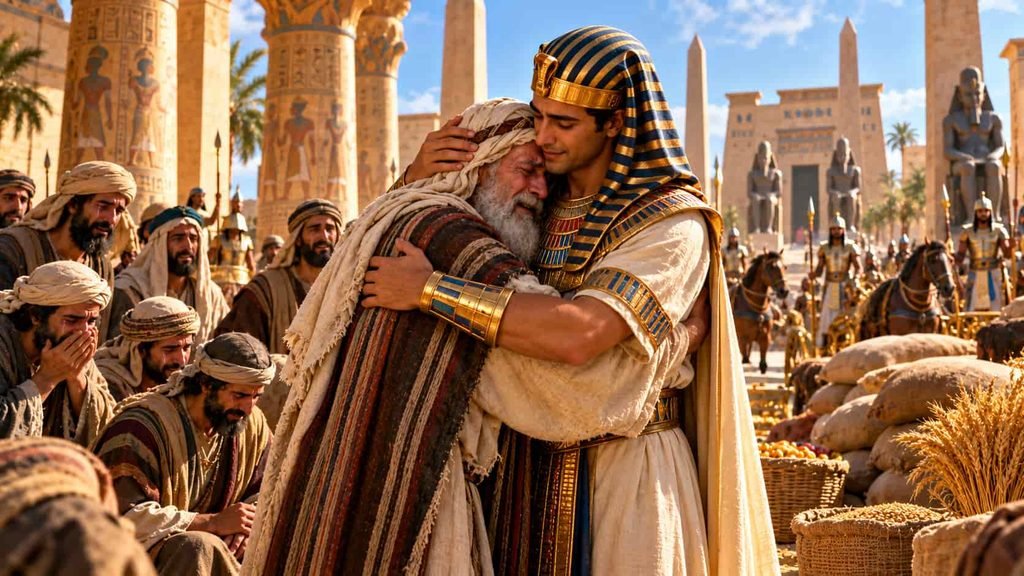
The story of Prophet Yaqub (Jacob) and his beloved son Prophet Yusuf (Joseph) is one of the most remarkable stories of faith, patience, hardship, and divine wisdom.
It is a story of a young prophet who was separated from his family, thrown into a well, taken to Egypt, tested with temptation, imprisoned despite his innocence, and eventually raised to a position of great responsibility.
It is also the story of a father whose heart remained attached to his son for many years. Yaqub endured an extraordinary separation, yet he never allowed his grief to destroy his hope in Allah.
The story begins with a remarkable dream.
Prophet Yusuf’s Remarkable Dream
When Yusuf was still young, he saw a dream unlike any ordinary dream. He saw eleven stars, the sun, and the moon prostrating before him.
According to the narration in the source, Yusuf was nine years old when he saw this dream. He told his father, Yaqub, about it.
Yaqub immediately understood that the dream carried a great meaning. He therefore advised his son:
“My son, do not relate your dream to your brothers.”
Yaqub knew that his other sons might become jealous of Yusuf because of the special place he held in his father’s heart.
The dream would remain hidden for many years, but its meaning would eventually become clear.
Yusuf and His Brothers
Yusuf had eleven brothers, including his brother Binyamin (Benjamin), who was his brother from the same mother.
The source describes Yusuf as exceptionally beautiful and explains that Yaqub loved him and gave him special attention. This caused jealousy among his brothers.
They began to think that Yusuf and his brother were more beloved to their father than they were.
Their jealousy became so strong that they eventually decided to remove Yusuf from their lives.
At first, some of them considered killing him, but another suggestion was made: they could throw him into a well, where a passing caravan might find him and take him away.
Yaqub was already worried about Yusuf. When his sons asked to take him with them, he expressed his fear that a wolf might attack him.
The source contains different explanations for why Yaqub mentioned the wolf, including a narration that Yaqub had seen a troubling dream concerning Yusuf.
Yusuf Is Thrown Into the Well
The brothers eventually took Yusuf away from his father.
Instead of protecting their younger brother, they threw him into a deep well.
At that moment, Yusuf was young and completely alone.
The source narrates that while Yusuf was in the well, he called upon Allah, the God of Ibrahim (Abraham), Ishaq (Isaac), and Yaqub, asking Him to have mercy upon his weakness, helplessness, and young age.
Allah did not abandon him.
A traveling group from Egypt soon arrived near the well. One of the travelers lowered a bucket into it to collect water.
Yusuf held onto the bucket, and they pulled him out.
When they saw the beautiful young boy, they realized that they had found something they could take with them to Egypt.
Yusuf Is Sold and Taken to Egypt
When Yusuf’s brothers discovered what had happened, they came to the travelers.
They falsely claimed that Yusuf was a servant belonging to them who had run away.
Yusuf was threatened and pressured to confirm their story. According to the source, he eventually remained silent and was sold to the travelers.
He was taken to Egypt and sold for a small number of dirhams. The source contains different reports concerning the exact amount.
Thus, the young Yusuf entered a completely new life far away from his father.
But what appeared to be a tragedy was only the beginning of a much greater journey.
Yusuf in the House of the Aziz
Yusuf was purchased by the Aziz of Egypt, an important man in the country.
The Aziz instructed his wife to treat Yusuf well and suggested that he might benefit them or perhaps become like a son.
Yusuf was therefore raised in the household of the Aziz.
As he grew older, his extraordinary beauty and character became evident.
But another great test was waiting for him.
Yusuf Refuses Temptation
When Yusuf reached maturity, the wife of the Aziz attempted to seduce him.
She closed the doors and invited him toward what Allah had forbidden.
But Yusuf refused.
The source presents his response as an expression of his awareness of Allah and his determination to remain pure. One narration describes how he reminded her that Allah sees what people do even when no one else is watching.
Yusuf then ran toward the door.
She followed him and grabbed his garment, tearing it from behind.
At that moment, the Aziz arrived.
She immediately tried to accuse Yusuf, but Yusuf declared his innocence.
Evidence then appeared through the condition of his garment: if it had been torn from the front, the accusation against Yusuf might have appeared plausible; but because it had been torn from behind, it indicated that Yusuf had been running away while she was pursuing him.
The source also records a testimony attributed to a child concerning this matter.
The truth of Yusuf’s innocence therefore became clear.
The Women of Egypt
News of the incident spread throughout Egypt.
Women began talking about the wife of the Aziz and criticizing her for being attracted to the young man in her household.
She eventually invited a group of women to a gathering.
She gave each woman a knife and fruit and then brought Yusuf before them.
When they saw him, they were so amazed by his appearance that they cut their hands without immediately realizing the pain.
The women recognized why she had been so captivated by Yusuf.
But instead of abandoning his principles, Yusuf remained steadfast.
When the pressure continued, he turned to Allah and asked Him for protection.
He preferred imprisonment to falling into sin.
Yusuf Enters Prison
Despite the evidence supporting his innocence, Yusuf was imprisoned.
This was another painful stage of his life.
He had already experienced separation from his father and betrayal by his brothers. Now he was imprisoned despite his innocence.
Yet Yusuf continued to trust Allah.
Even in prison, his knowledge and wisdom became apparent.
Two prisoners came to him after seeing dreams and asked him to interpret them.
Yusuf explained the meaning of their dreams, and the events later occurred as he had described.
The source also preserves a narration describing Yusuf’s prayer for relief from imprisonment and the hope that Allah would soon bring an end to his hardship.
The King’s Dream
After Yusuf had spent years in prison, the king of Egypt saw a strange dream.
He saw seven fat cows being eaten by seven thin cows.
He also saw seven green ears of grain and seven dry ears.
The king’s advisers could not explain the dream.
Then the man who had previously been imprisoned with Yusuf remembered him.
He went to Yusuf and asked him about the dream.
Yusuf explained that the dream represented seven years of prosperity followed by seven difficult years.
He advised the people to cultivate the land during the prosperous years and carefully preserve much of the harvest so that it could be used during the years of famine.
Yusuf’s interpretation was not merely an explanation of a dream. It was also a practical plan for protecting an entire nation from famine.
Yusuf’s Innocence Is Publicly Established
When the king ordered that Yusuf be brought before him, Yusuf did not immediately leave the prison.
Instead, he asked the king to investigate the women who had previously accused him.
The women were questioned, and the truth became clear.
The wife of the Aziz admitted that she had attempted to seduce Yusuf and that Yusuf had remained steadfast.
The source emphasizes that Yusuf’s innocence was established through the testimony surrounding the incident and through his own refusal to compromise his principles.
Only then was Yusuf brought before the king with his reputation cleared.
Yusuf Becomes Responsible for the Storehouses
The king recognized Yusuf’s knowledge, honesty, and ability.
Yusuf was given authority over the storehouses of the land.
He became responsible for managing the food supplies during the years of prosperity and preparing for the coming famine.
The young boy who had once been thrown into a well had now become a trusted official in Egypt.
The prisoner had become a man of authority.
The hardship had not destroyed Yusuf.
Instead, through patience and faith, it had become part of the path that Allah had prepared for him.
The Famine Brings Yusuf’s Brothers to Egypt
The years of famine eventually arrived.
People from surrounding regions traveled to Egypt to obtain food.
Among those who came were Yusuf’s brothers.
They entered Egypt seeking provisions, but they did not recognize the man before whom they stood.
Yusuf, however, recognized them immediately.
He asked them about their family and learned that they had another brother, Binyamin.
Yusuf instructed them to bring their brother with them the next time they came, otherwise they would not receive the same measure of provisions.
The brothers returned to their father Yaqub and asked him to allow Binyamin to travel with them.
Yaqub’s Precautions and His Trust in Allah
Yaqub remembered what had happened to Yusuf.
He was reluctant to send Binyamin with his other sons.
Eventually, after they gave him a solemn promise that they would protect their brother, he allowed Binyamin to accompany them.
Yaqub also instructed his sons not to enter Egypt through a single gate. They were to enter through different gates.
Yet Yaqub immediately reminded them that precautions could not protect them from Allah’s decree.
His trust remained in Allah.
The source presents this as an important balance: a believer takes reasonable precautions but does not depend upon those precautions instead of depending upon Allah.
Yusuf Reveals His Identity to Binyamin
When the brothers returned to Egypt with Binyamin, Yusuf recognized his younger brother.
Eventually, Yusuf privately revealed his identity to him.
He told Binyamin:
“I am your brother Yusuf.”
He reassured him and asked him not to be distressed because of what their brothers had done in the past.
Yusuf wanted Binyamin to remain with him, but Binyamin explained that his father had taken a solemn covenant from his brothers to return him safely.
Yusuf then devised a plan.
A royal measuring vessel was placed among Binyamin’s belongings. After the brothers had begun their journey, Yusuf’s men stopped them and searched their belongings.
The vessel was found with Binyamin.
According to the arrangement accepted by the brothers, the person in whose possession the vessel was found would remain behind.
Thus Binyamin stayed in Egypt with Yusuf.
Yaqub’s Great Sorrow
When the brothers returned to Yaqub without Binyamin, his grief became even greater.
He remembered Yusuf.
Years had passed, but his love for his son had never disappeared.
The source describes the extraordinary intensity of Yaqub’s sorrow and crying. His eyes were affected by his grief, and he remained deeply saddened by the separation.
Yet Yaqub did not lose hope.
He told his sons to search for Yusuf and his brother and warned them not to despair of the mercy and relief of Allah.
This is one of the most powerful lessons in the story of Yaqub:
Patience does not mean that a person feels no pain. It means that even while suffering, the heart continues to trust Allah.
Yusuf Reveals Himself to His Brothers
The brothers eventually returned to Yusuf in a state of great need.
They asked him for help and pleaded with him because of their difficult circumstances.
At this moment, Yusuf finally revealed the truth.
He told them that he was Yusuf.
The brothers were shocked.
The brother whom they had abandoned years earlier was alive.
The boy whom they had thrown into the well had become the powerful official standing before them.
The one whom they had sold into slavery was now in a position to decide their fate.
But Yusuf did not choose revenge.
The story had reached its most important moment: the moment when power could have produced retaliation, but forgiveness became greater than revenge.
The Return of Yusuf’s Father
The news of Yusuf finally reached Yaqub.
The long separation was coming to an end.
The source records narrations concerning the arrival of the family in Egypt and the fulfillment of Yusuf’s childhood dream.
The dream of the eleven stars, the sun, and the moon had pointed toward the eventual honor and reunion of Yusuf with his family.
Yaqub and the family were finally brought together with Yusuf.
The years of grief, separation, and uncertainty had come to an end.
The Meaning of Yusuf’s Dream
When Yusuf was a child, his dream seemed mysterious.
He had seen eleven stars, the sun, and the moon prostrating before him.
Years later, the meaning became clear.
The source explains that the sun represented Yusuf’s mother, the moon represented Yaqub, and the eleven stars represented his brothers.
The source also discusses different interpretations of the final prostration. One important interpretation presented is that the family prostrated to Allah in gratitude for the reunion and the fulfillment of His promise, rather than worshipping Yusuf.
Thus, the dream that began the story also became part of its conclusion.
The Greatest Lessons from Yaqub and Yusuf
The story of Prophet Yaqub and Prophet Yusuf contains lessons that remain meaningful for every generation.
Patience During Hardship
Yaqub suffered an unimaginable separation from his son, yet he continued to hope in Allah.
His patience teaches us that a believer can grieve deeply without losing faith.
Trust in Allah
Yusuf passed through a well, slavery, temptation, false accusation, and imprisonment.
At every stage, he remained connected to Allah.
Purity in Difficult Circumstances
Yusuf was offered temptation when he was young and vulnerable.
He chose obedience to Allah even when the consequences were painful.
Taking the Right Means
Yaqub advised his sons to enter Egypt through different gates while reminding them that no precaution could replace reliance upon Allah.
Forgiveness
When Yusuf finally gained power over his brothers, he did not make the ending of the story about revenge.
Instead, the family was brought back together.
Allah’s Wisdom May Be Hidden
When Yusuf was thrown into the well, no one could have imagined that this would eventually lead him to Egypt, authority, and the fulfillment of his childhood dream.
A painful event can sometimes become one part of a much greater plan.
Conclusion
The story of Prophet Yaqub and Prophet Yusuf is a story of separation and reunion, sorrow and hope, temptation and purity, hardship and success.
Yusuf lost his home, his freedom, and many years of his life.
Yaqub lost his beloved son and carried the pain of that separation for years.
Yet neither story ended where it first appeared to be ending.
The boy in the well became a respected leader.
The prisoner became responsible for Egypt’s food supplies.
The grieving father was finally reunited with his beloved son.
And the mysterious dream of Yusuf’s childhood was eventually understood.
The story reminds us that Allah’s plan can be unfolding even when we cannot see it.
For those who are facing hardship, the story of Yaqub and Yusuf carries a timeless message:
Do not despair of Allah’s mercy, and never assume that a difficult chapter is the end of your story.